What does it really mean to be “left behind? And how does this framing influence policy responses at local, national and EU level?
Over the last three years, research conducted within the EXIT project across 17 rural, post-industrial and urban territories in eight countries has generated solid, comparative evidence on territorial inequalities in Europe. Combining ethnographic fieldwork, spatial economic analysis and policy analysis, the research documents how inequalities are experienced in everyday life, revealing persistent gaps in access to healthcare, education, employment, mobility, housing and digital infrastructure, alongside intersecting social and spatial vulnerabilities.
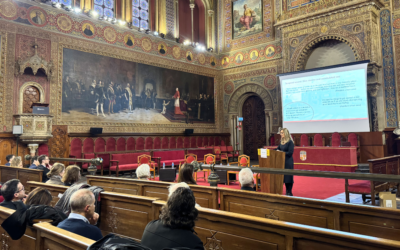
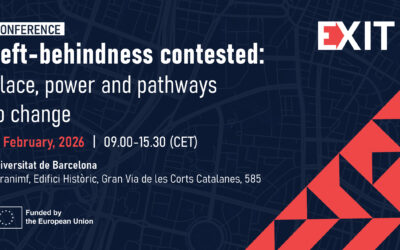
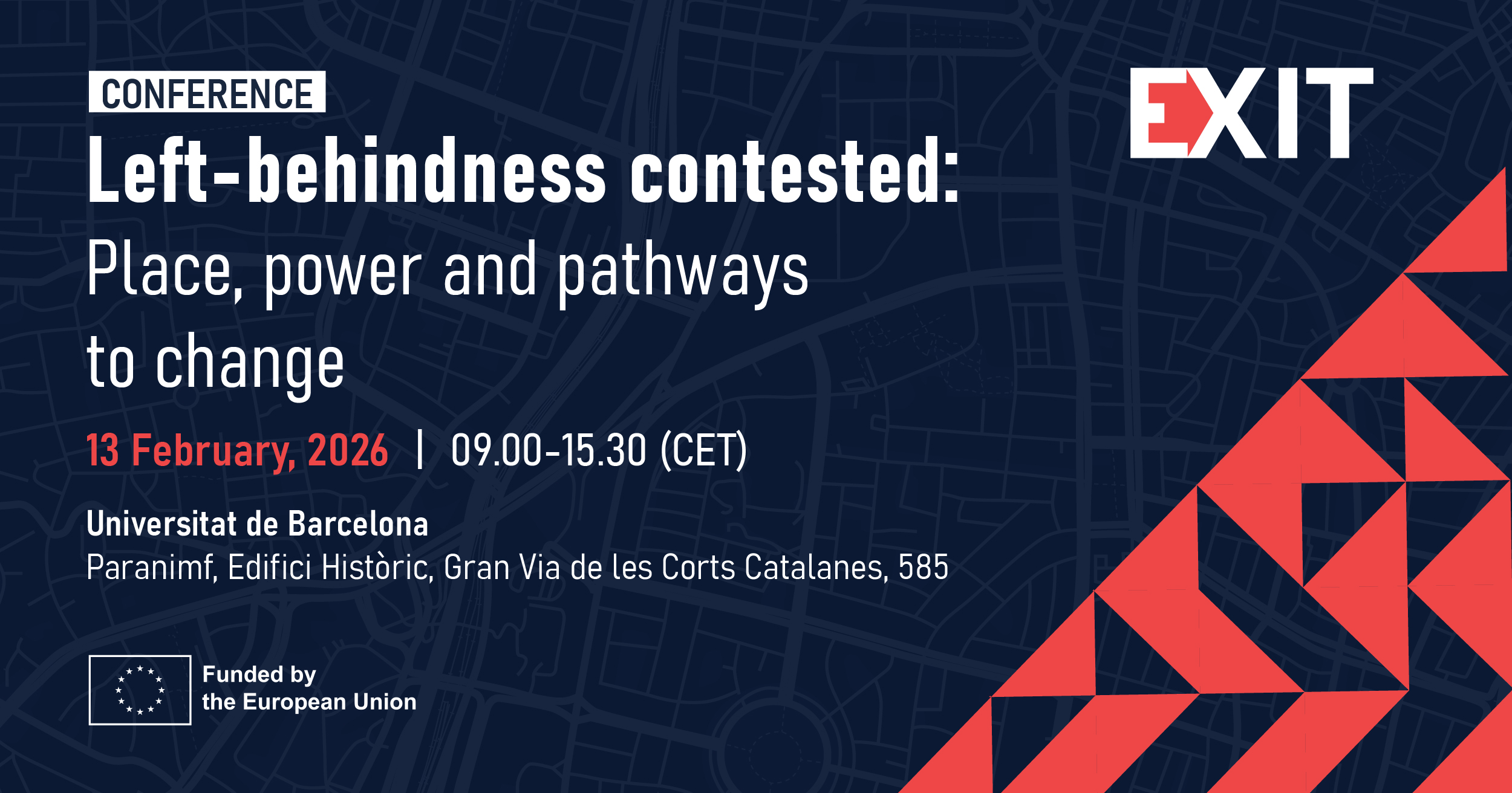
These findings form the analytical foundation of the upcoming Conference “Left-behindness contested: Place, power and pathways to change”, where research insights will be translated into dialogue on policy uptake and future action. The event is organized by the University of Barcelona with the support of the EXIT Project consortium and will take place on 13 February 2026, from 09:00 to 15:30 (CET), at the Paranimf Hall of the University of Barcelona’s Historic Building.
Registration is open – secure your place here.
The conference will open with a keynote address by Professor Akhil Gupta (UCLA), a leading sociocultural anthropologist internationally recognised for his ethnographic work on inequality, governance and marginalisation. On the occasion of his visit to Europe and the University of Barcelona, Professor Gupta will reflect on how dominant categories and indicators shape understandings of inequality.
Building on this keynote, the conference will bring together researchers, policymakers and civil society organisations to examine territorial inequalities from local-level perspectives. Discussions will address how inequalities are measured, experienced and governed, including the realities of migrant and racialised communities, depopulation processes, and the limits of conventional indicators. Particular attention will be given to local strategies for territorial cohesion and to how community-based knowledge can be integrated into EU, national and regional policymaking through evidence-informed and participatory approaches that balance immediate needs with long-term structural change.