
Ensuring that no place and no community is left behind is an essential condition for fair, sustainable,and cohesive development across the EU. New comparative research presented by the EXIT Project, funded by Horizon Europe, argues that achieving that goal requires rethinking how territorial inequalities are measured, understood, and addressed.
The findings were presented on 13 February 2026 at the European conference “Left-behindness contested: Place, power and pathways to change” hosted by the University of Barcelona in cooperation with the EXIT consortium, bringing together leading academics, policymakers, and civil society representatives from across the world.
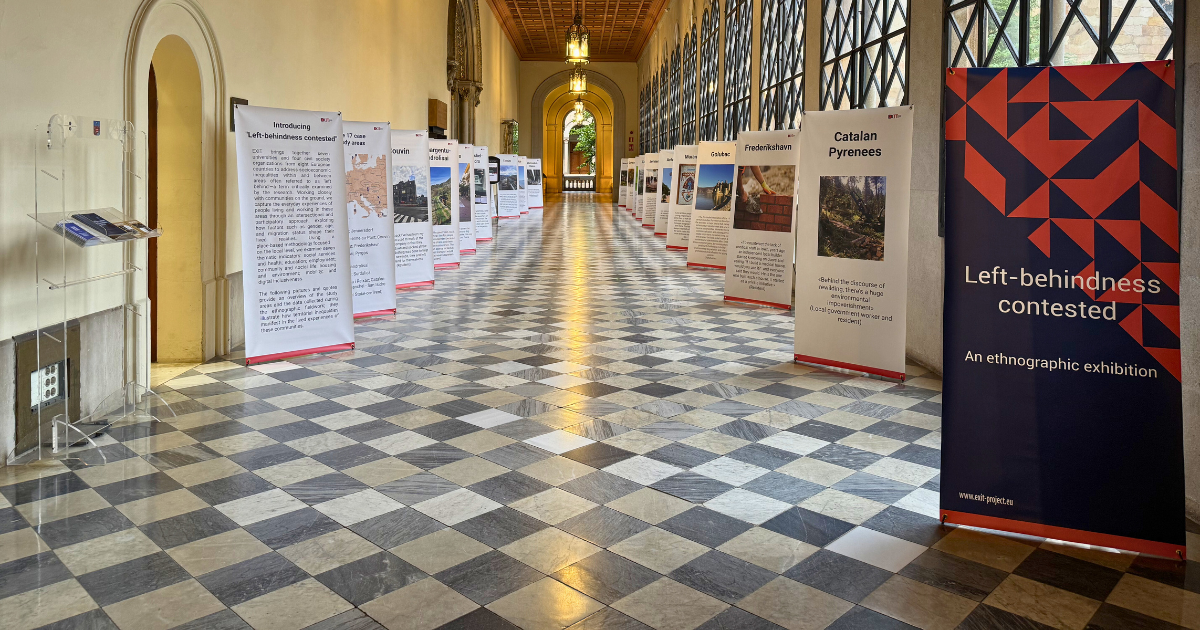
Moving beyond economic indicators
Opening the conference, Joan Guàrdia, Rector of the University of Barcelona, underlined the role of universities in producing rigorous knowledge that informs public decision-making and strengthens social cohesion.
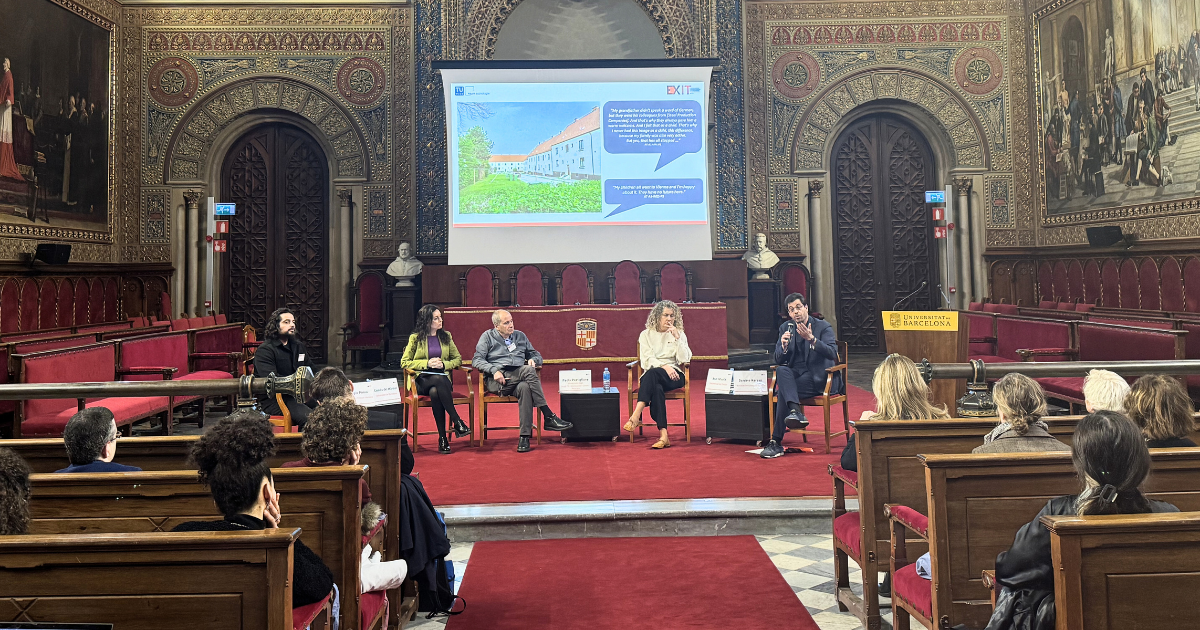
Olga Jubany, Full Professor at the University of Barcelona and Coordinator of the EXIT consortium, set the stage of the conference, demonstrating that territorial inequality extends far beyond GDP rankings or productivity metrics. Across the 17 territories studied, researchers identified persistent gaps in access to healthcare, education, employment, housing, mobility and digital infrastructure. The evidence shows that spatial disadvantage intersects with gender, migration status, race and class — producing cumulative and locally specific vulnerabilities.
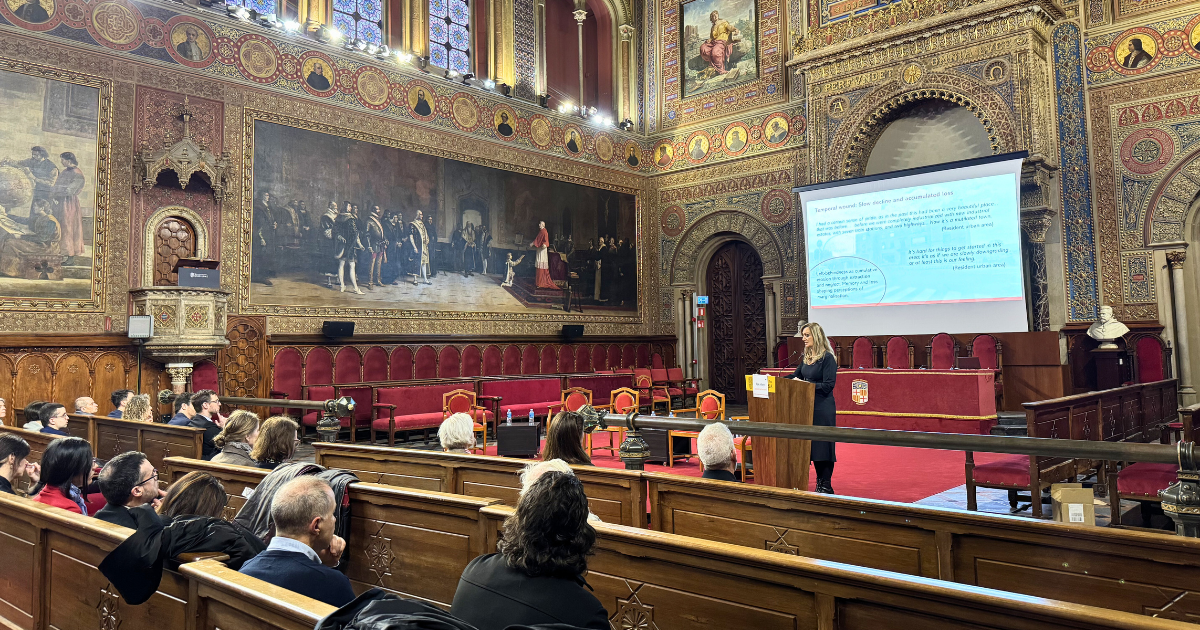
The research calls for more nuanced, place-sensitive approaches capable of capturing lived realities alongside economic indicators.
Anticipating future disparities
In a forward-looking keynote, Akhil Gupta, Professor of Anthropology at the University of California and internationally recognised scholar of inequality and governance, examined the distributive implications of the green transition. Large-scale environmental investments, he noted, will reshape local economies and territorial opportunities. Without careful planning, such transitions may generate uneven outcomes across regions.
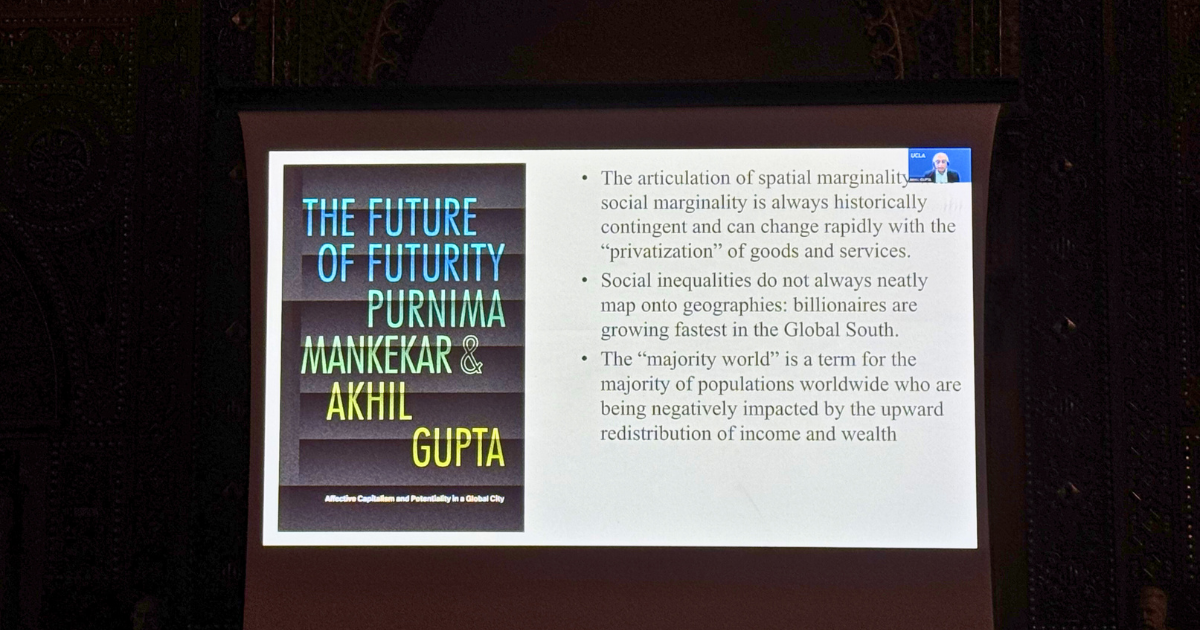
His intervention framed sustainability not only as an environmental objective, but as a spatial and social challenge requiring coordinated action.
Measuring what matters locally
In the session “From indicators to insights: Local-level perspectives on territorial inequalities” scholars examined how inequality is quantified and interpreted.
Daniele Karasz, Researcher at the Vienna University of Technology, highlighted how migrant and racialised communities are often underrepresented in territorial statistics. Ana Viñuela, Associate Professor of Economics at the University of Oviedo, stressed the importance of multidimensional and locally adapted indicators to capture relative deprivation. Giorgio Pirina, Researcher at the Ca’ Foscari University of Venice, presented ethnographic findings from Italian contexts, demonstrating how inequality shapes social relations and institutional trust. Camila del Mármol, Associate Professor at the University of Barcelona, analysed depopulation processes and how communities negotiate the social and symbolic value of place.
The session, discussed by Paolo Postiglione, Professor of Economic Statistics at the G. d’Annunzio University of Chieti–Pescara, concluded that quantitative metrics must be complemented by qualitative, place-based knowledge to support effective policy design.
Local strategies for territorial cohesion
In the session “Insight Forum: Local strategies for territorial cohesion”, speakers examined how different forms of inequality intersect at the local level and how place-based initiatives can strengthen social cohesion.
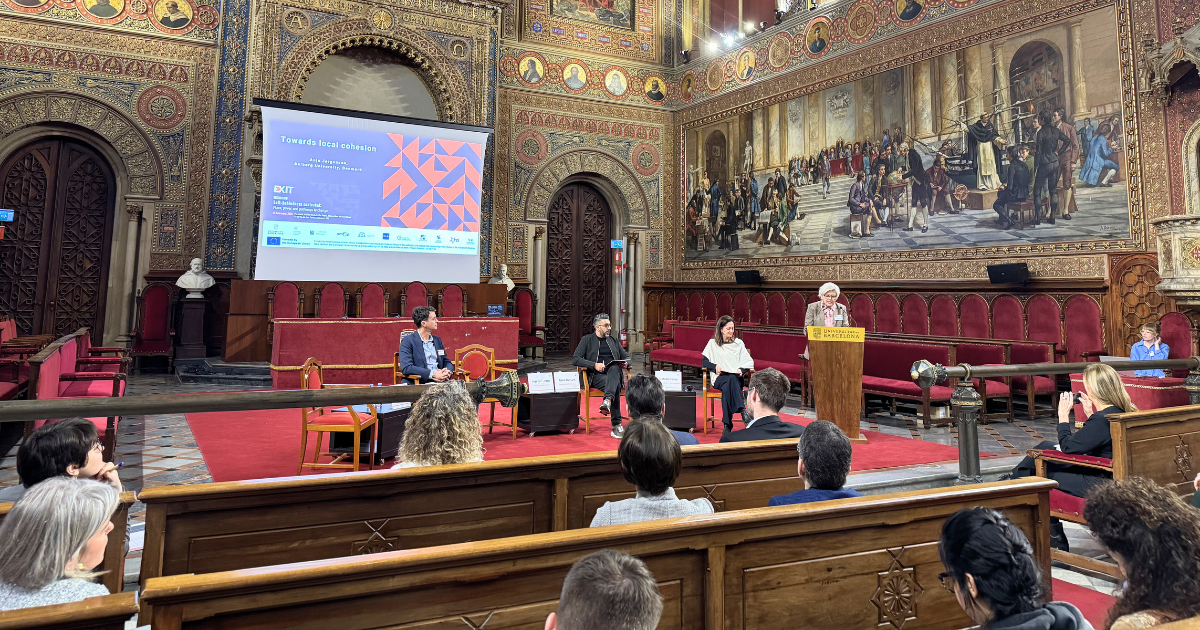
Isabelle Carles, Researcher at Université Libre de Bruxelles, analysed the gendered dimensions of territorial disparities, highlighting how institutional and labour-market arrangements can perpetuate unequal opportunities for women across regions. Ajmal Hussain, Associate Professor at the University of Warwick, discussed “landscapes of inequality” in post‑industrial England, showing how race, place, and class combine to shape lived experiences of marginalisation. Anja Jørgensen, Professor at Aalborg University, focused on pathways towards local cohesion, emphasising the role of community infrastructures. Finally, Žarko Šunderić, from the Center for Social Policy, addressed the difficulty of breaking the vicious circle between urgent social needs and long-term reforms.
From strategies to policy: Integrating local know-how in policymaking
The conference also highlighted practical outputs aimed at strengthening territorial cohesion.
A policy roundtable moderated by Nancy Zoidou Saripapa, Researcher at KMOP – Social Action and Innovation Centre, brought together Oriol Nel·lo, Professor at the Autonomous University of Barcelona, Sara Pilia, Project Manager at ARCI – Associazione Ricreativa e Culturale Italiana; Laura Mereu, resident of Gennargentu-Mandrolisai; Erasmo Palazzotto, Member of the Board of the European Civic Forum, and Paul Himmelbauer, Coordinator for Spatial Development at the Austrian Conference on Spatial Planning.
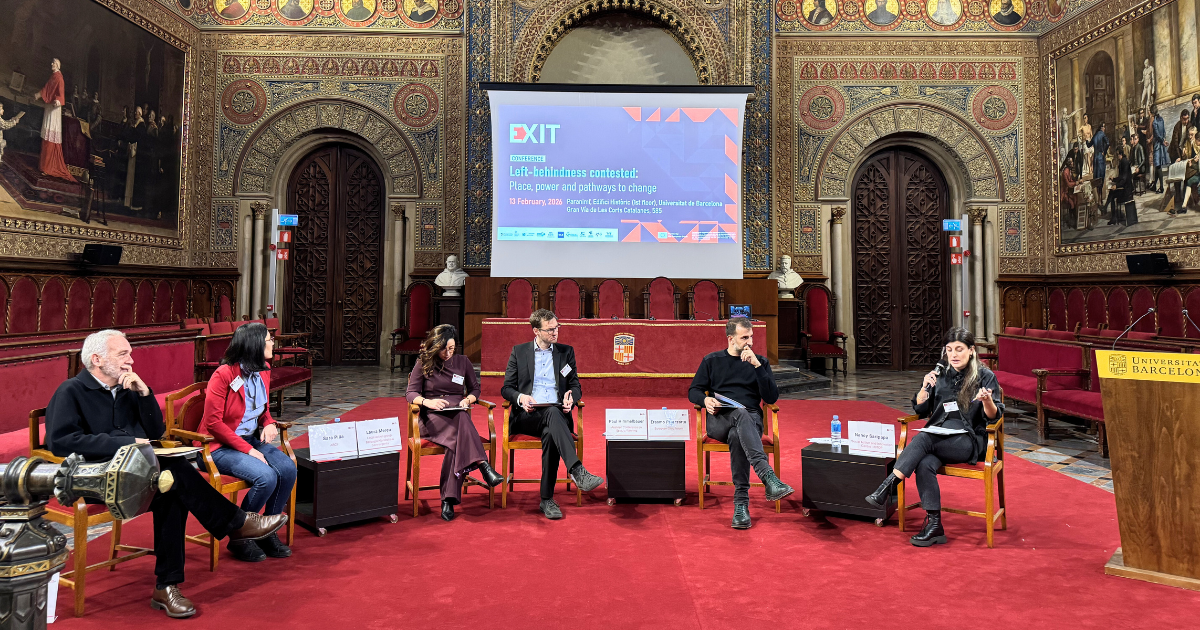
Participants emphasized that local initiatives are essential but require sustained institutional support and multi-level coordination to achieve long-term cohesion.
A central highlight was the launch of two practical tools:
- The Guide for Communities, supporting local actors in articulating territorial challenges and strengthening civic engagement.
- The Guide for Policymakers, offering evidence-based, context-sensitive recommendations grounded in participatory research.
Rethinking “left-behindness”
In her closing reflections, Martina Klett-Davies, Lecturer at King’s College London, emphasised that EXIT reframes “left-behindness” not as an inherent characteristic of places, but as a condition shaped by structural economic and governance dynamics.
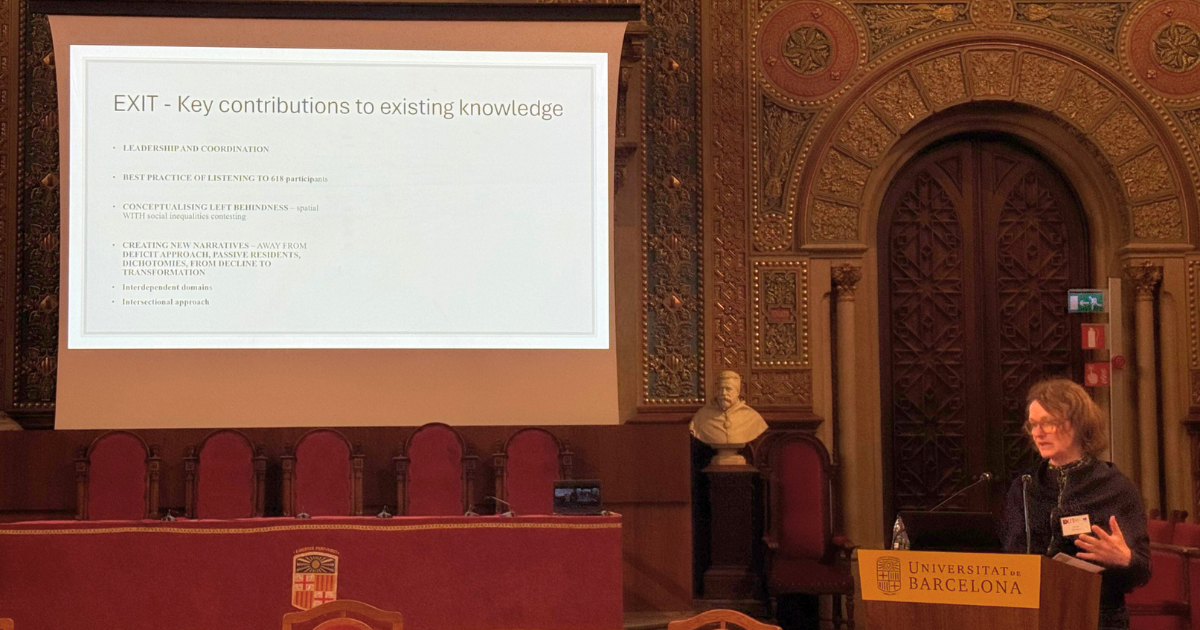
As Europe navigates demographic shifts, economic transformation, and environmental transition, the EXIT project underscores a central message: ensuring balanced territorial development is requires deliberate, evidence-based coordination across all levels of governance.
About the EXIT Project
The EXIT project, funded by the European Union’s Horizon Europe Programme, explores sustainable strategies to counteract territorial inequalities from an intersectional approach. It employs mixed-methods research to comprehensively analyse “left-behindness” as a concept used to describe territorial inequalities in specific areas. The project aims to identify strategies and practices to tackle these inequalities and provide a deeper understanding of how these areas are perceived as “left-behind”.
The consortium consists of: University of Barcelona (Coordinator), TU Wien, University of Oviedo, Ca’ Foscari University of Venice, University of Warwick, Université libre de Bruxelles and Aalborg University, alongside civil society partners including the European Anti-Poverty Network (EAPN) Spain, ARCI APS, KMOP – Social Action and Innovation Centre, and the Centre for Social Policy.
For more information, please visit https://www.exit-project.eu/